One engineered change. One big number.
Real operations, real money saved. Every story starts with a load that was costing more than anyone realised.
Same pallet. Same machine. A third of the film.
Toreto wrapped the same pallet with each film in turn — same machine, same power stretch and tension settings — then weighed the film used and measured how well the load was held. The solid films ran their normal wrap configuration; Supersonic and Aerosonic ran roughly 50% fewer revolutions, so the same wrapper puts out twice as many pallets in a shift.
of Supersonic per pallet, against 200 g of 23µ solid wrap — at the same load stability
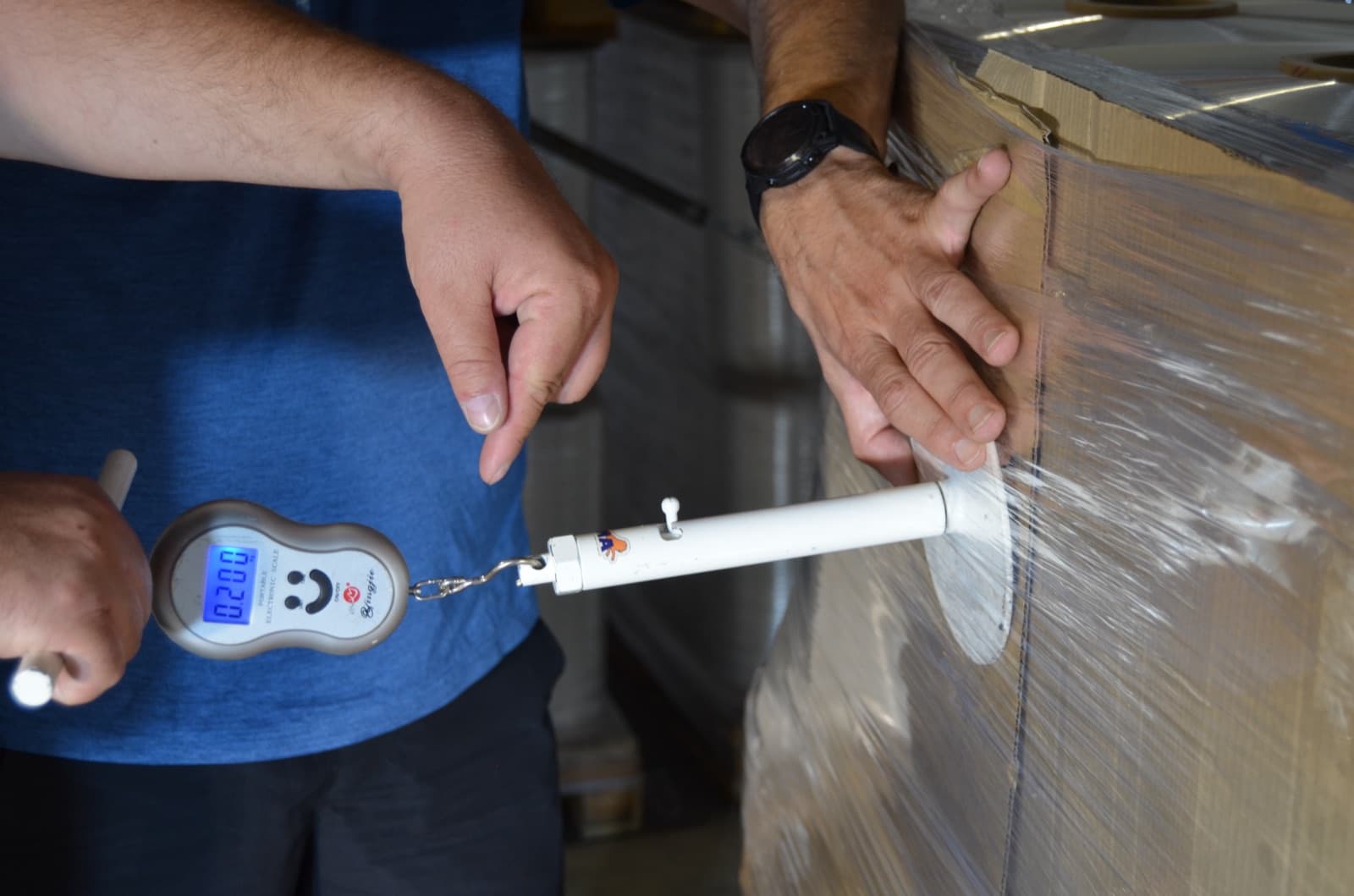
Load-stability testing at the Gilau plant: a digital force gauge measures how hard the wrap holds a pallet, in kilograms per square inch
| Film | Load stability | Film used | Cost to wrap |
|---|---|---|---|
| 23µ solid, 250% power stretch | 9.9 kg/sq in | 200 g | €0.48 |
| 20µ solid, 250% power stretch | 9.9 kg/sq in | 174 g | €0.42 |
| 17µ solid, 250% power stretch | 9.9 kg/sq in | 140 g | €0.37 |
| 12µ nano, 250% power stretch | 7.6 kg/sq in | 91 g | €0.32 |
| 12µ nano, double-wrapped | 11.9 kg/sq in | 182 g | €0.64 |
| Supersonic / Aerosonic 16µToreto | 10 kg/sq in | 66 g | €0.32 |
On its own, 12µ nano held 7.6 kg/sq in — the weakest result in the test. Nano is a fine-tuned film that depends on a perfect machine and perfect settings; when anything is off, it fails easily. In practice most users end up double-wrapping. That holds the load (11.9), but it now costs €0.64 a pallet and halves throughput: 50% slower and 50% more expensive than Supersonic at €0.32.
Supersonic (solid) and Aerosonic (macroperforated, breathable) are made from the same materials and perform the same, so you can switch between them at the same cost per pallet and on the same machine settings. Other breathable films on the market typically cost up to 100% more in use, and need their own settings to perform adequately.
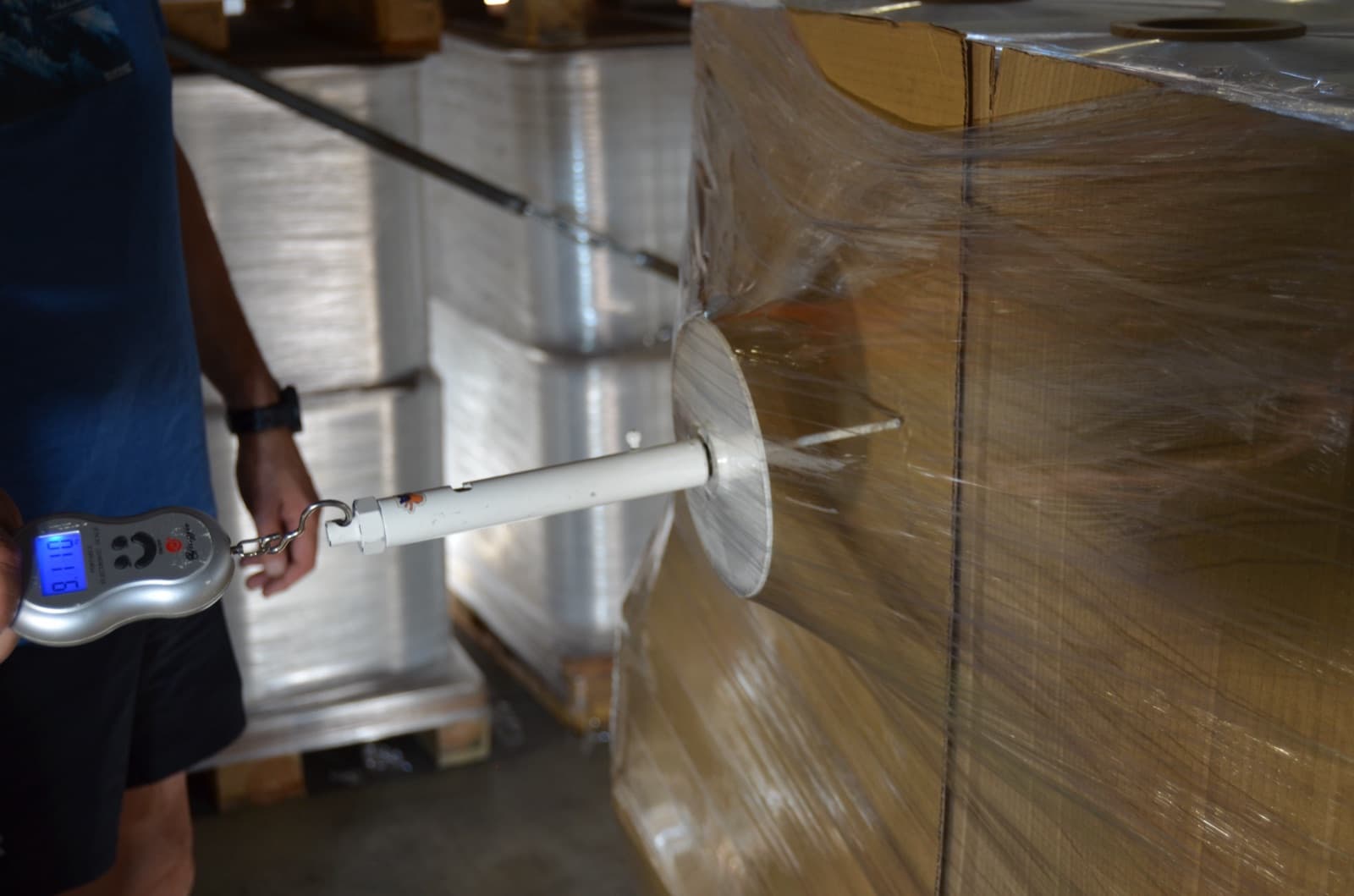
The force gauge pulling against Supersonic on a wrapped pallet during the comparative wrap tests 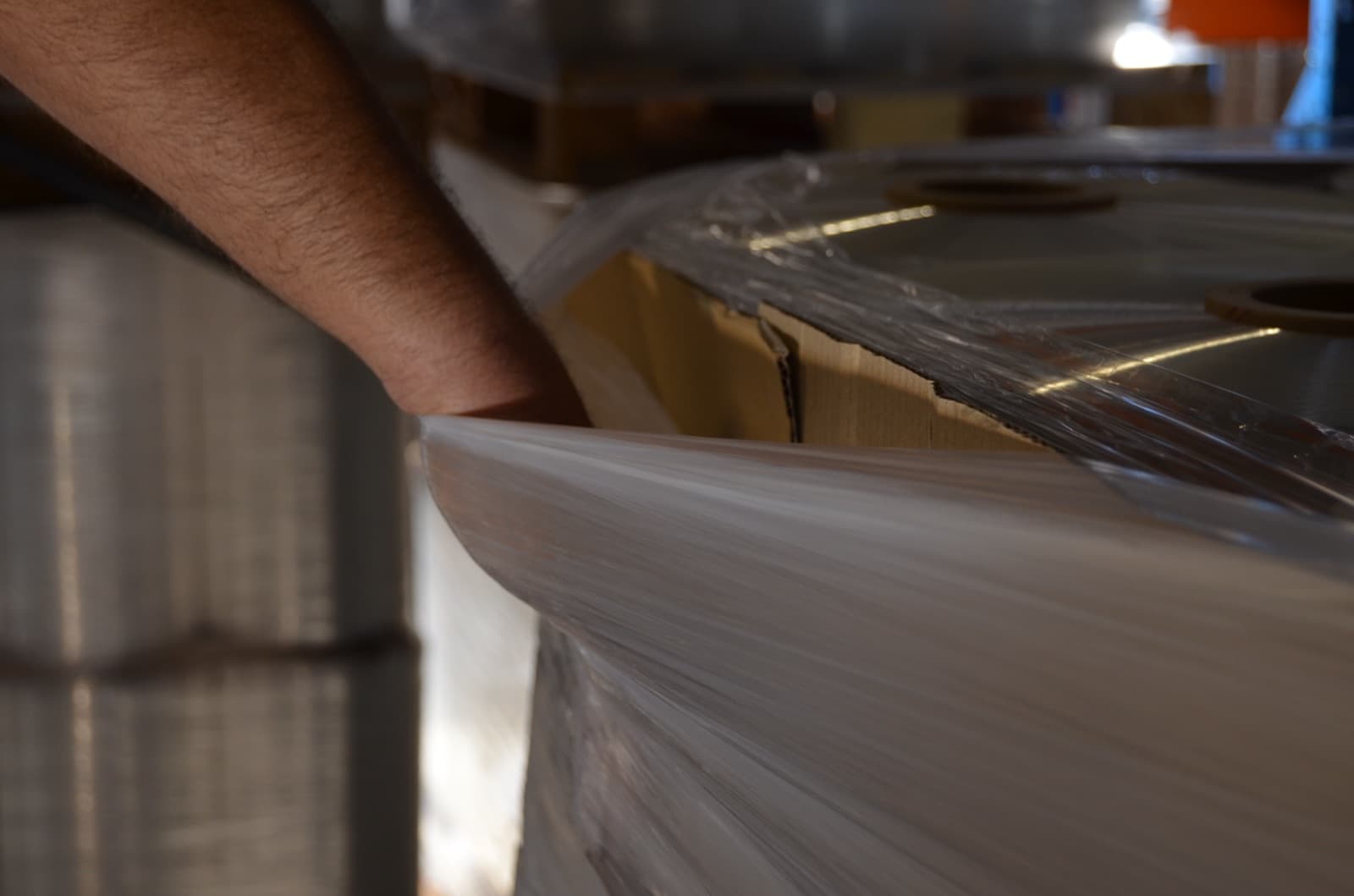
A hand pressing into the top corner of a pallet wrapped in reinforced film — the load does not give 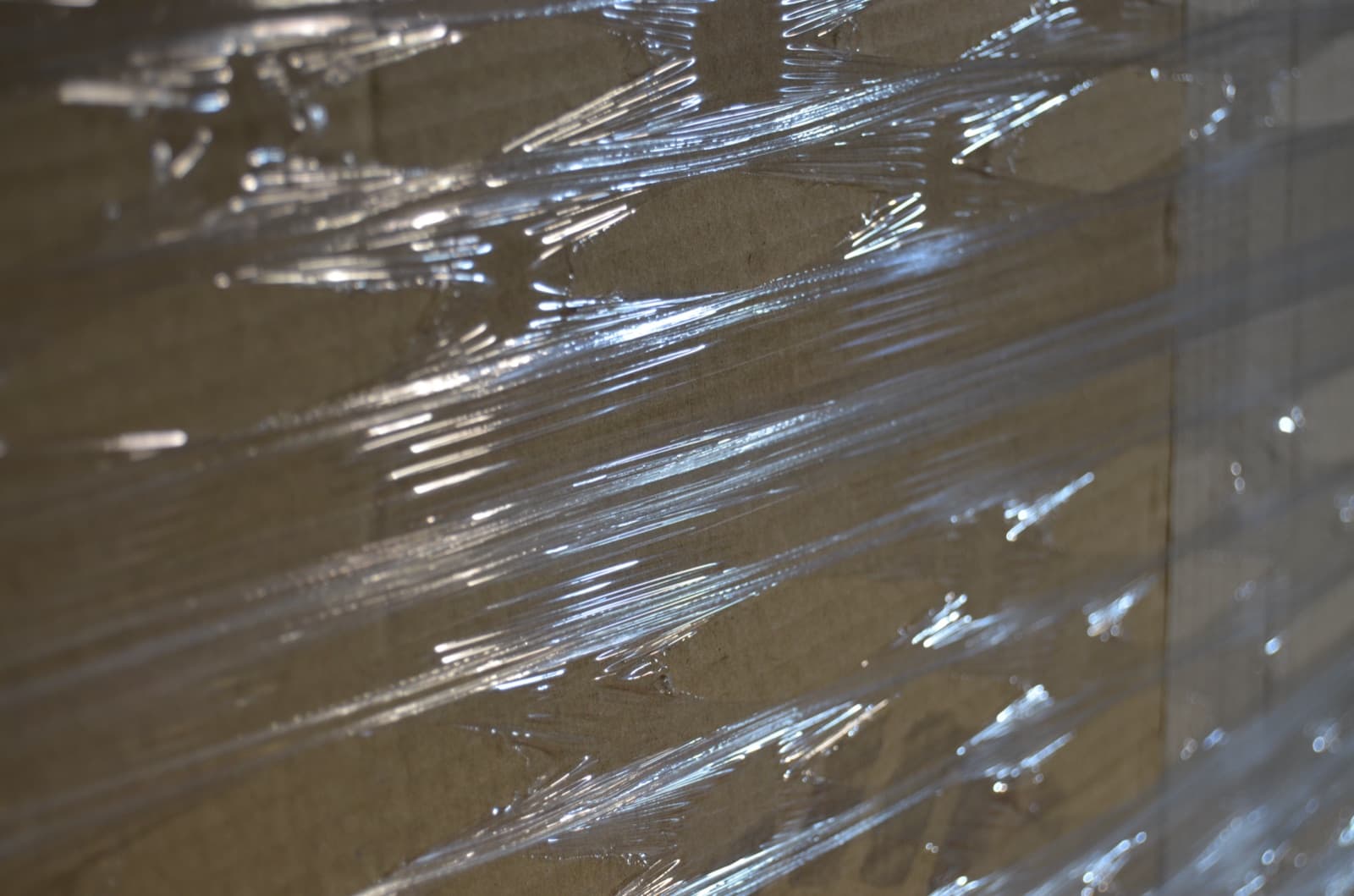
Close-up of the reinforcing lines running through the film on a wrapped load 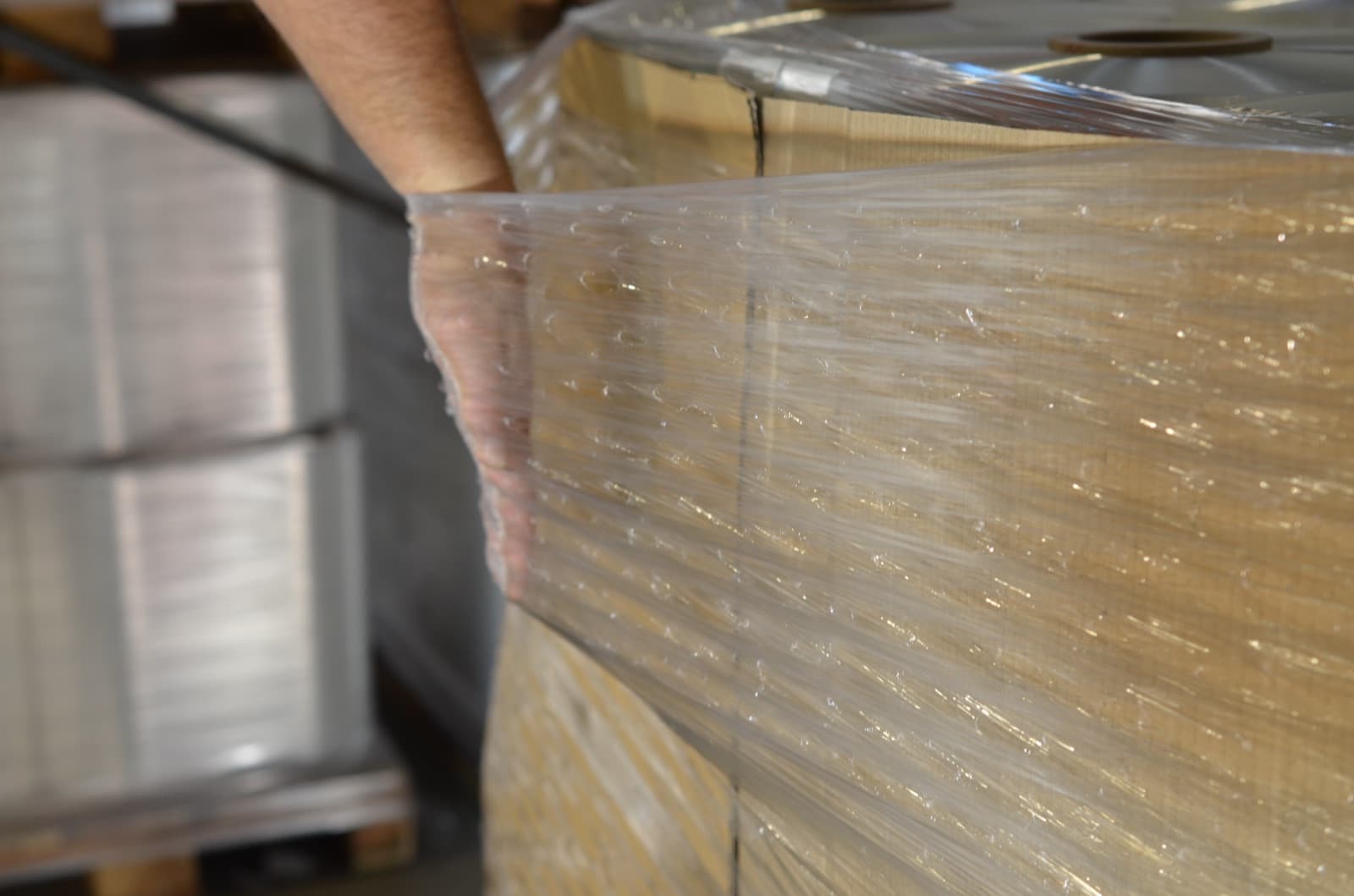
The edge of a pallet wrapped in reinforced film, checked by hand after wrapping 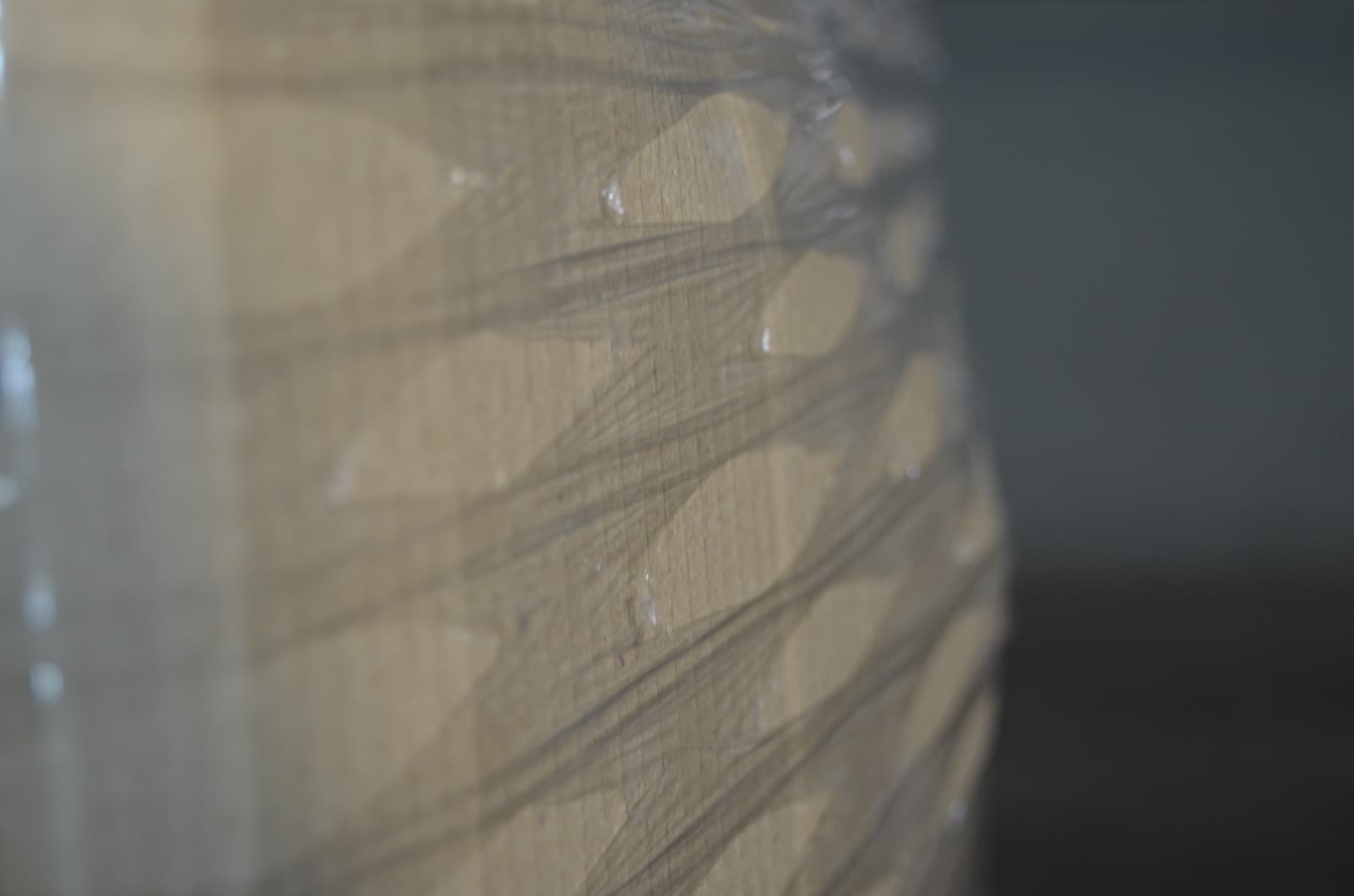
Aerosonic on a wrapped load with the aeration holes opened up by power pre-stretching 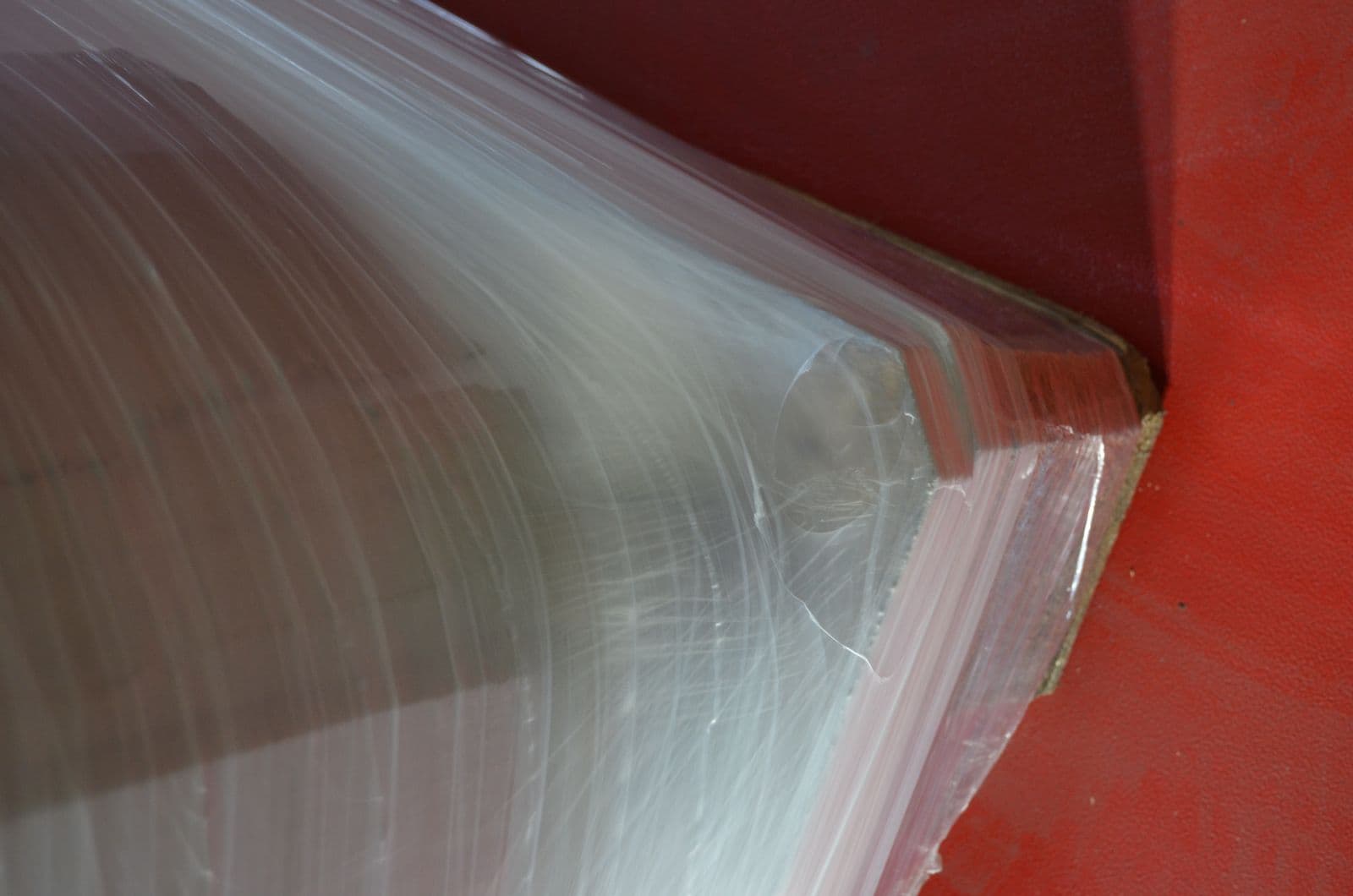
A Supersonic-wrapped pallet corner where the film has split — and the tear has stopped dead, held by the reinforcing lines instead of running on into the web
A pallet the machine could not hold. Rewrapped by hand in one minute.
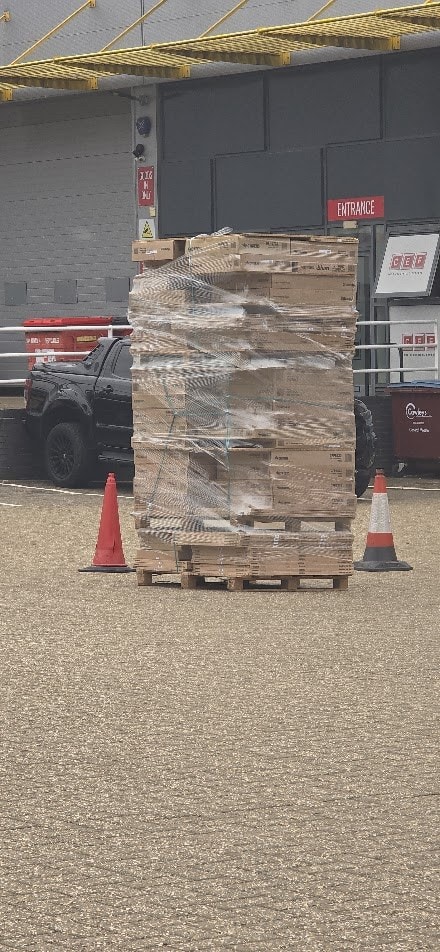
This pallet arrived from a factory machine-wrapped, with the film failed in several places. It is a hard load to wrap — large gaps and very sharp corners. Andy Chinnery took the film off it, weighed it, and rewrapped the same pallet by hand with the Hyper Wrap System. Both lines in the table are cut-and-weigh measurements taken that day.
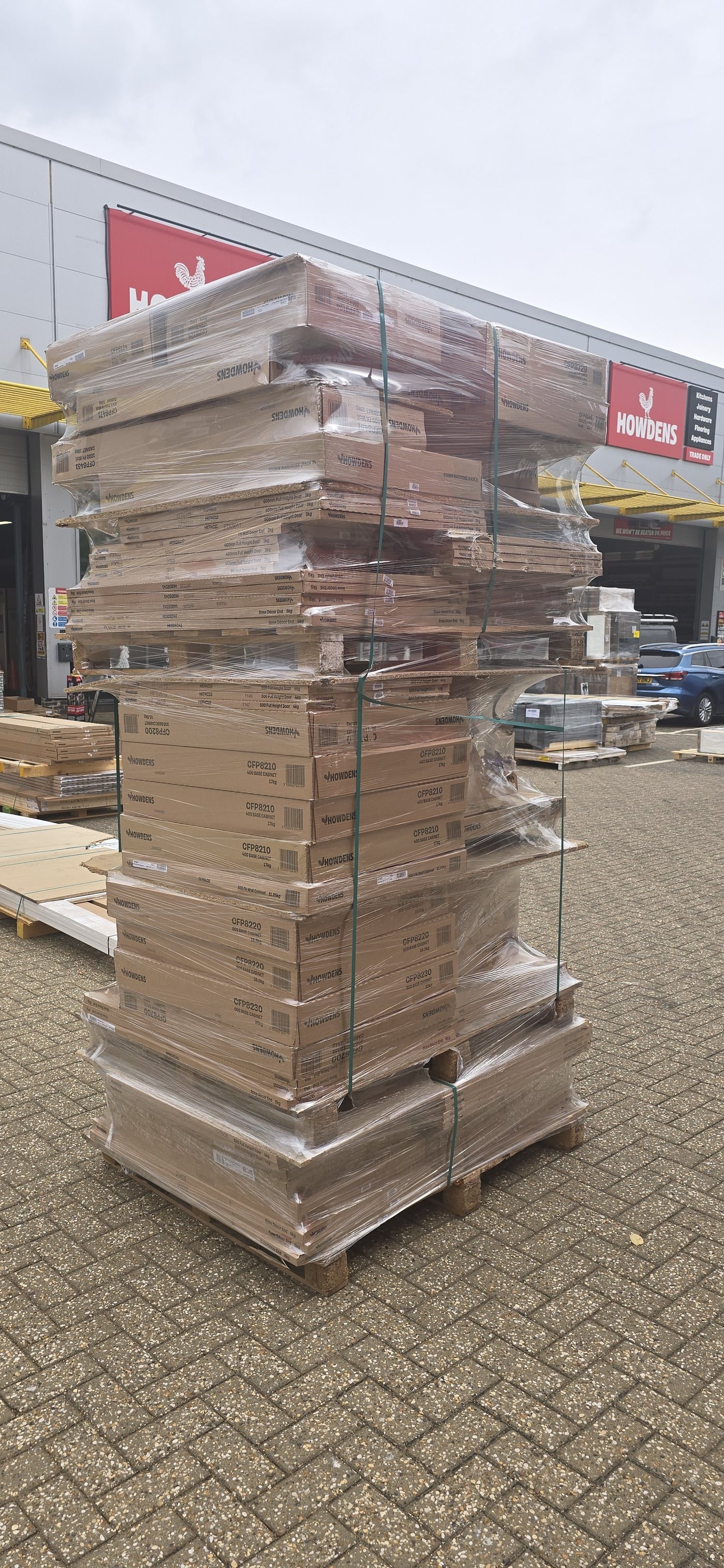 As it arrived
 Rewrapped with Hyper Wrap
Andy filmed the whole wrap in one go. The clip is 62 seconds long because that is how long the pallet took — nothing is sped up and nothing is edited out. Watch how little effort goes into the tension: the dispenser does it.
off the cost of wrapping the same pallet — £1.00 down to £0.74, in half the time
| Method | Film used | Film cost | Wrap time | Labour | Total per pallet |
|---|---|---|---|---|---|
| Conventional hand stretch film | 181 g | £0.60 | 2 min | £0.40 | £1.00 |
| Hyper Wrap SystemToreto | 151 g | £0.54 | 1 min | £0.20 | £0.74 |
The saving is in metres, not microns. Half as many revolutions went onto the pallet, because the film is at least twice as strong and wider — so the weight only falls from 181 g to 151 g while the length applied halves. Buying film by the micron would have missed this entirely.
Two minutes down to one takes 20p off every pallet on labour alone — and it is either twice as many pallets out of the warehouse in the same shift, or the same output with up to 50% fewer people on the job. On a large site that number dwarfs the film saving.
“As a reminder, I am 64 years old and have a bad back, yet I still achieved an excellent result with ease.”
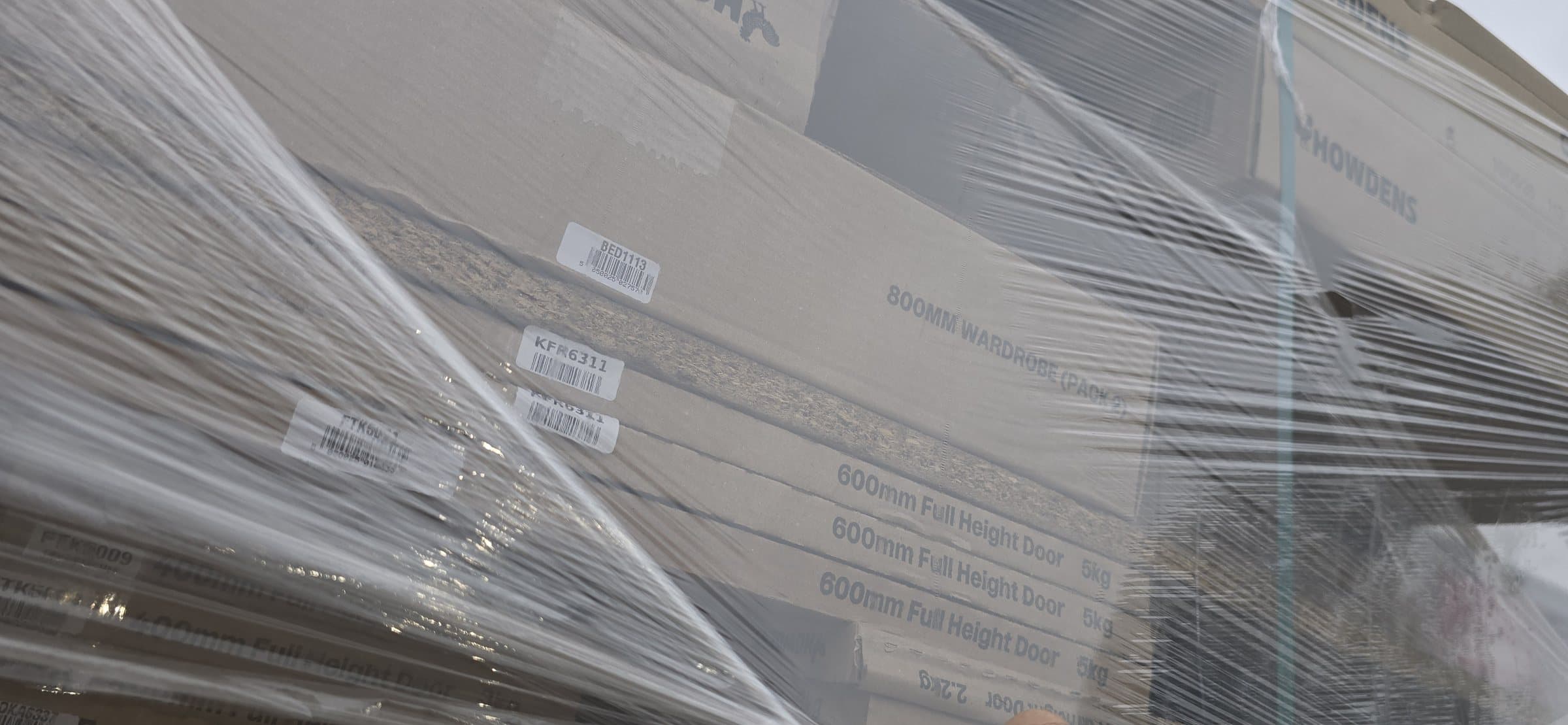
Andy's own frames from the same pallet: film drawn tight over sharp carton corners without snapping, and tension adjusted by hand throughout the wrap.
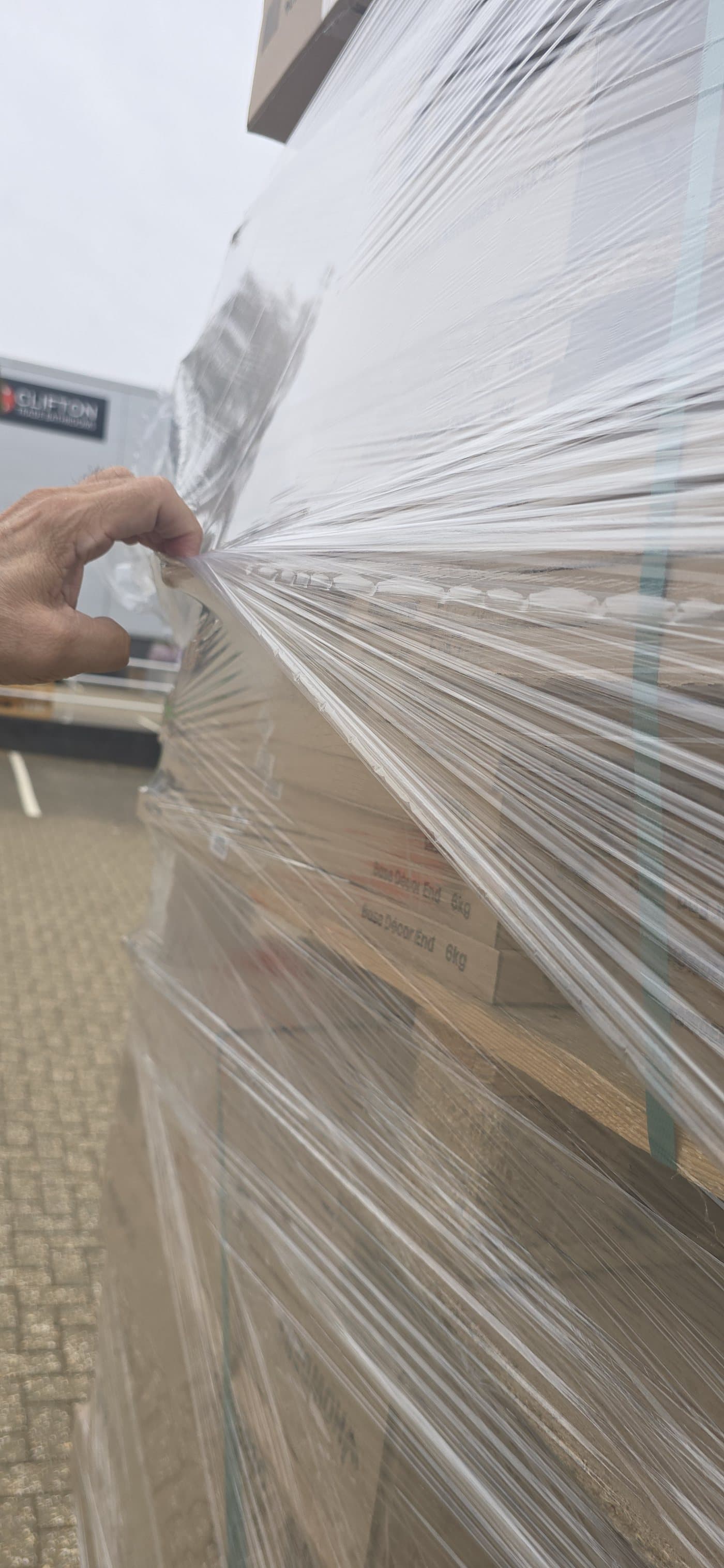
The film fanning out into dozens of strands under a hand pulling it off the load, every strand stretching and not one of them breaking 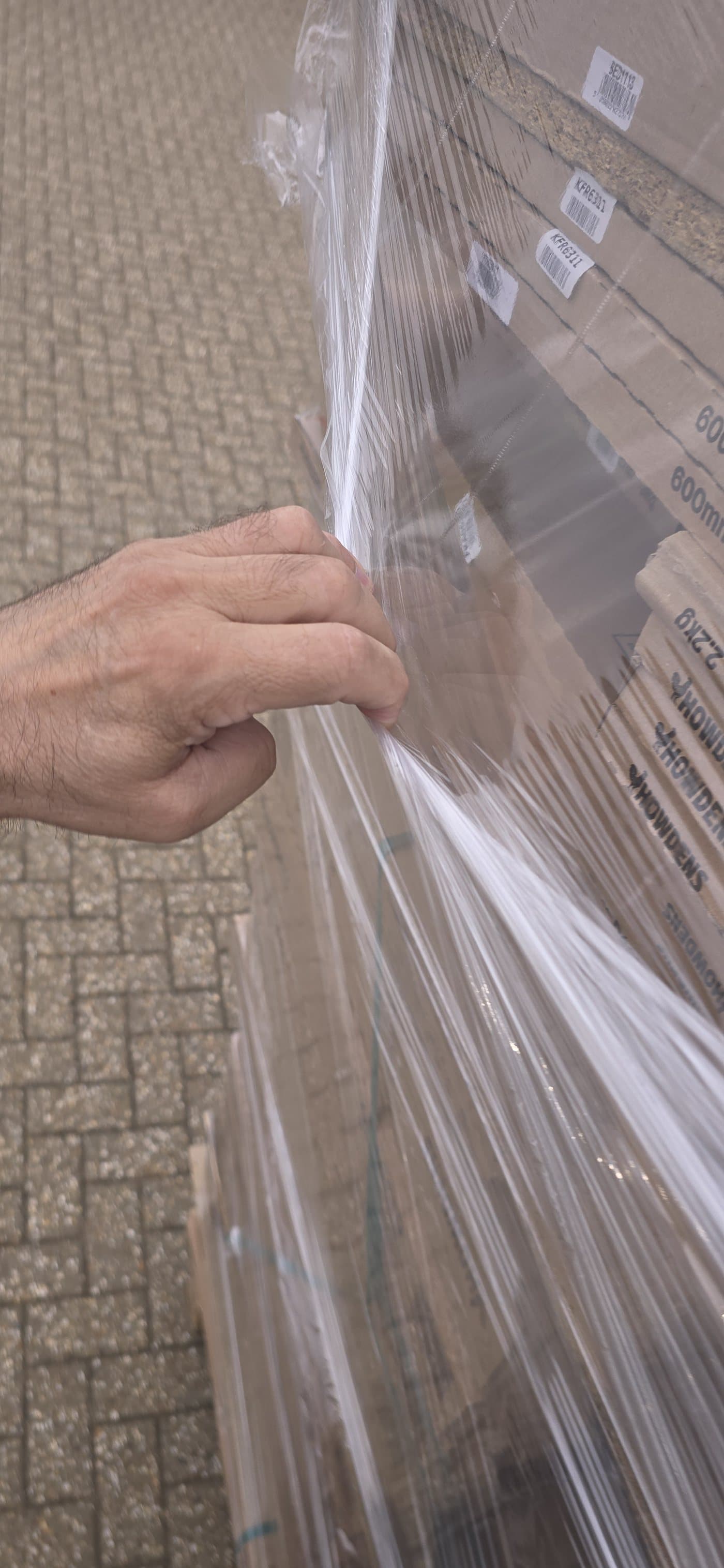
A hand gripping the applied Hyper Wrap film at the side of the load and pulling it away — the film stretches instead of tearing 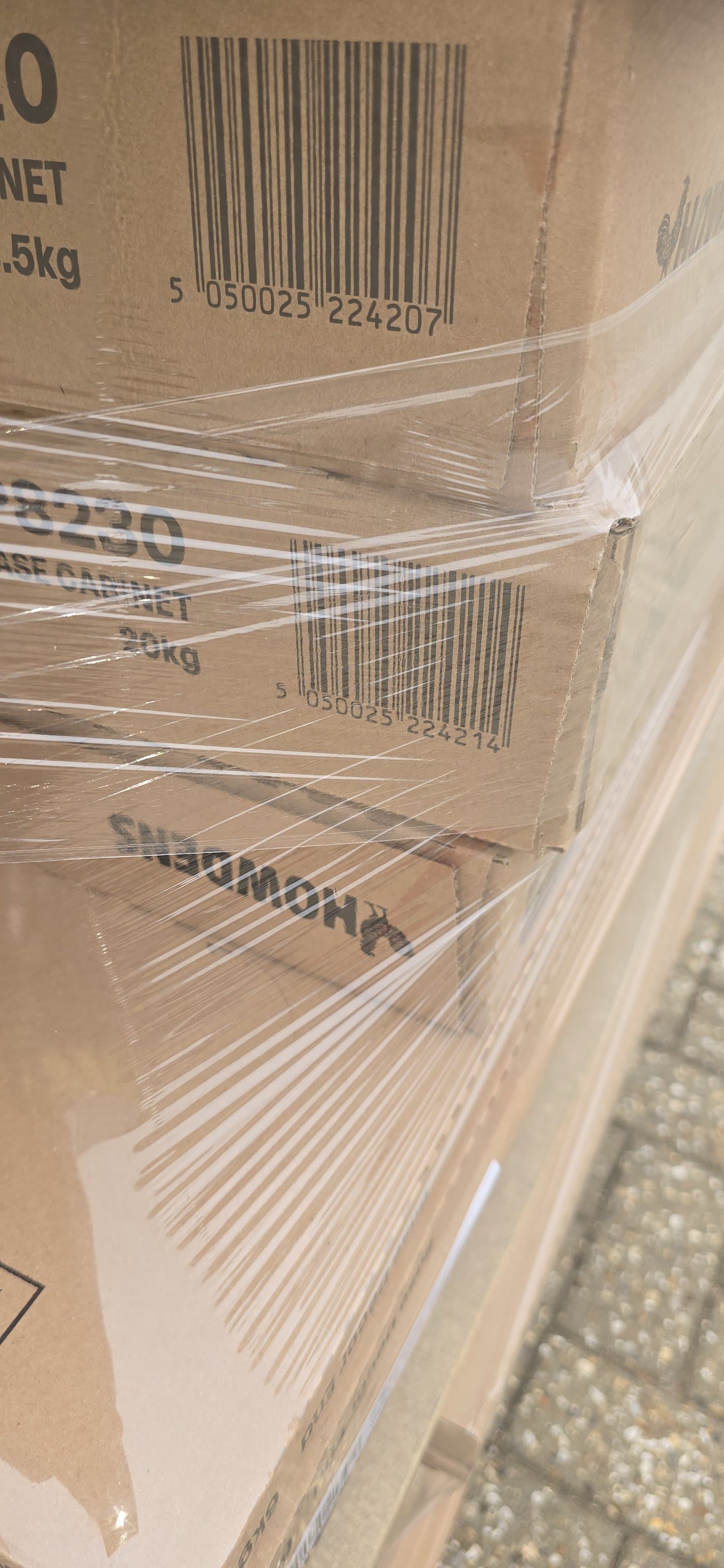
The film so evenly tensioned across the cartons that the barcodes underneath can still be scanned through it 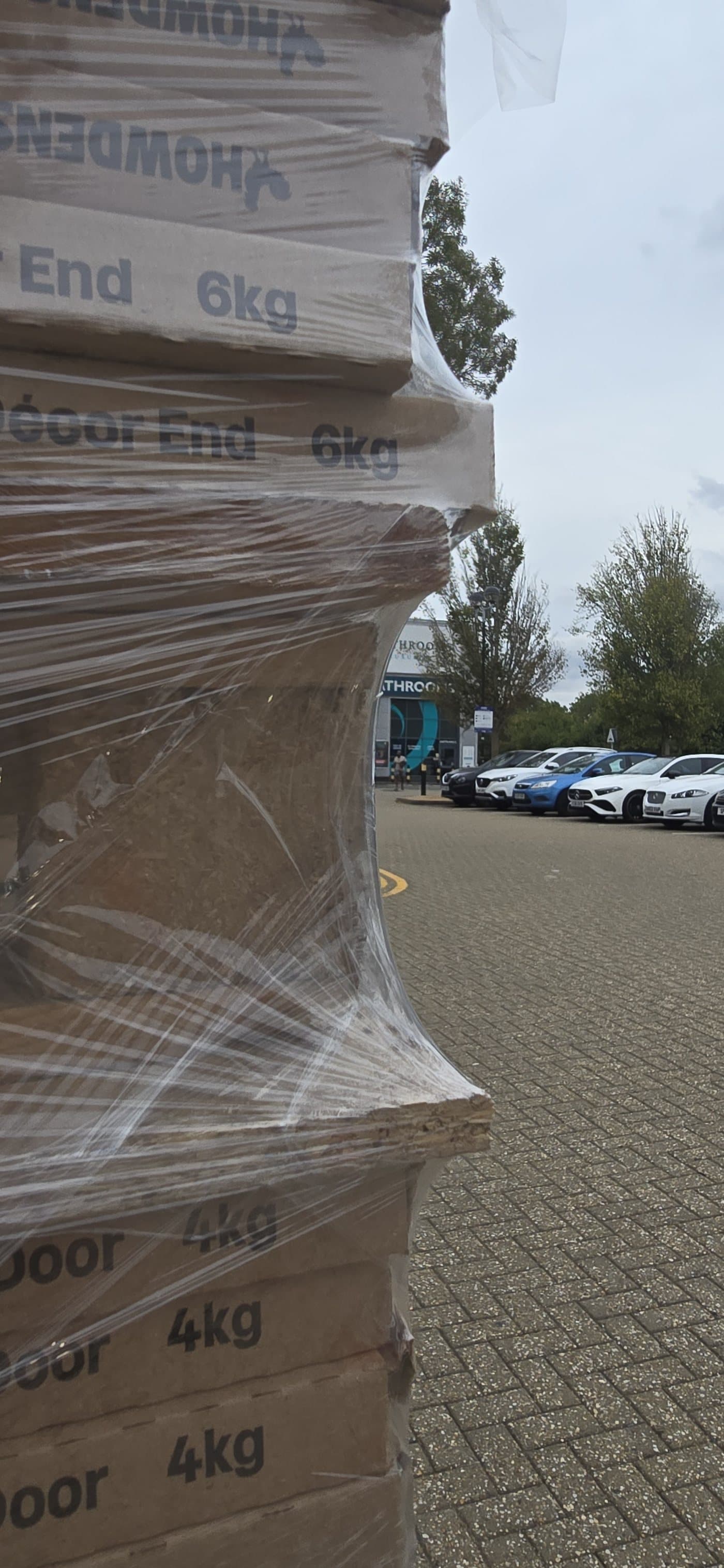
Hyper Wrap film drawn tight around the sharp corner of a stack of cartons without splitting 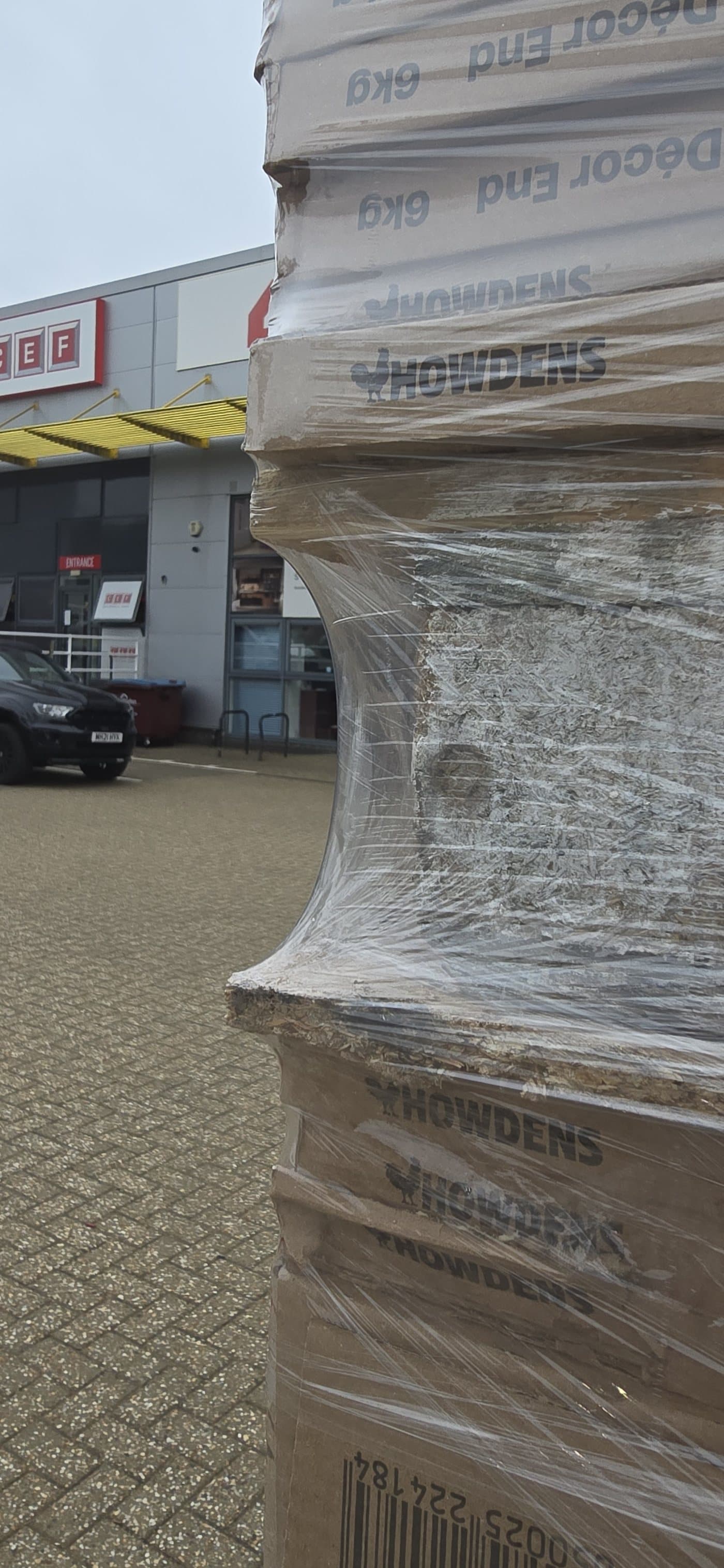
The corner of the rewrapped pallet: the film taut against sharp carton edges with no tear running into the web 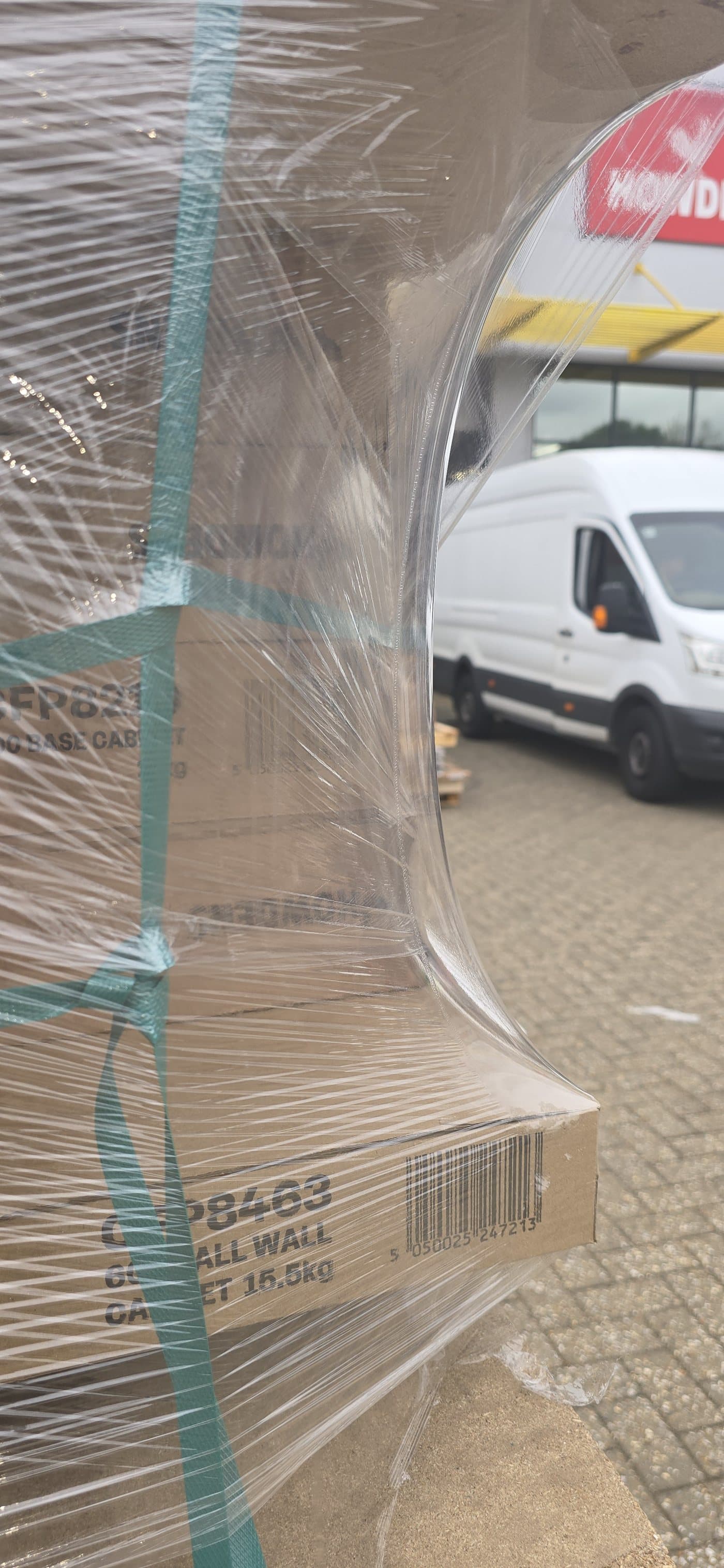
Hyper Wrap film over a pallet corner, holding the load's own strapping tight underneath it 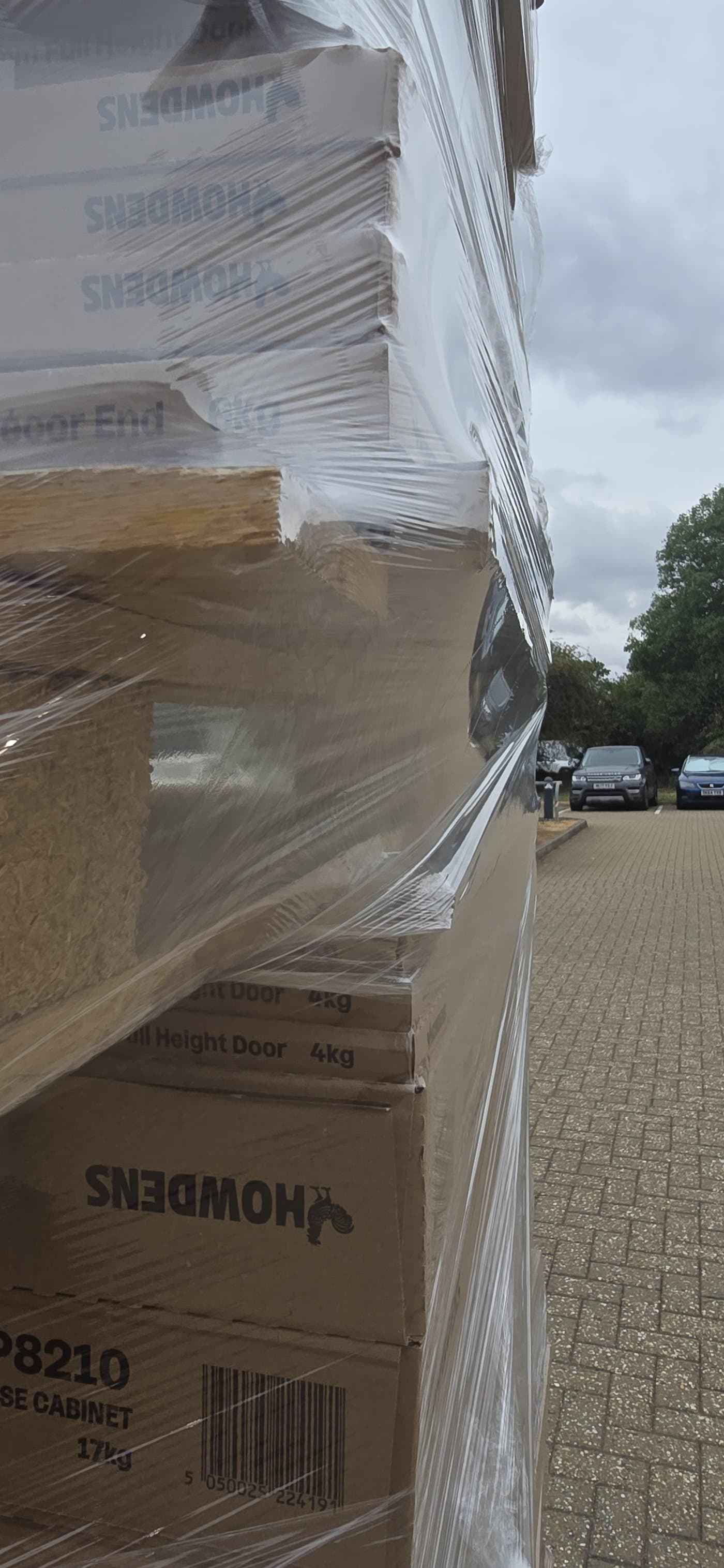
Film drawn over a length of timber standing proud of the load, taking the shape of it without splitting 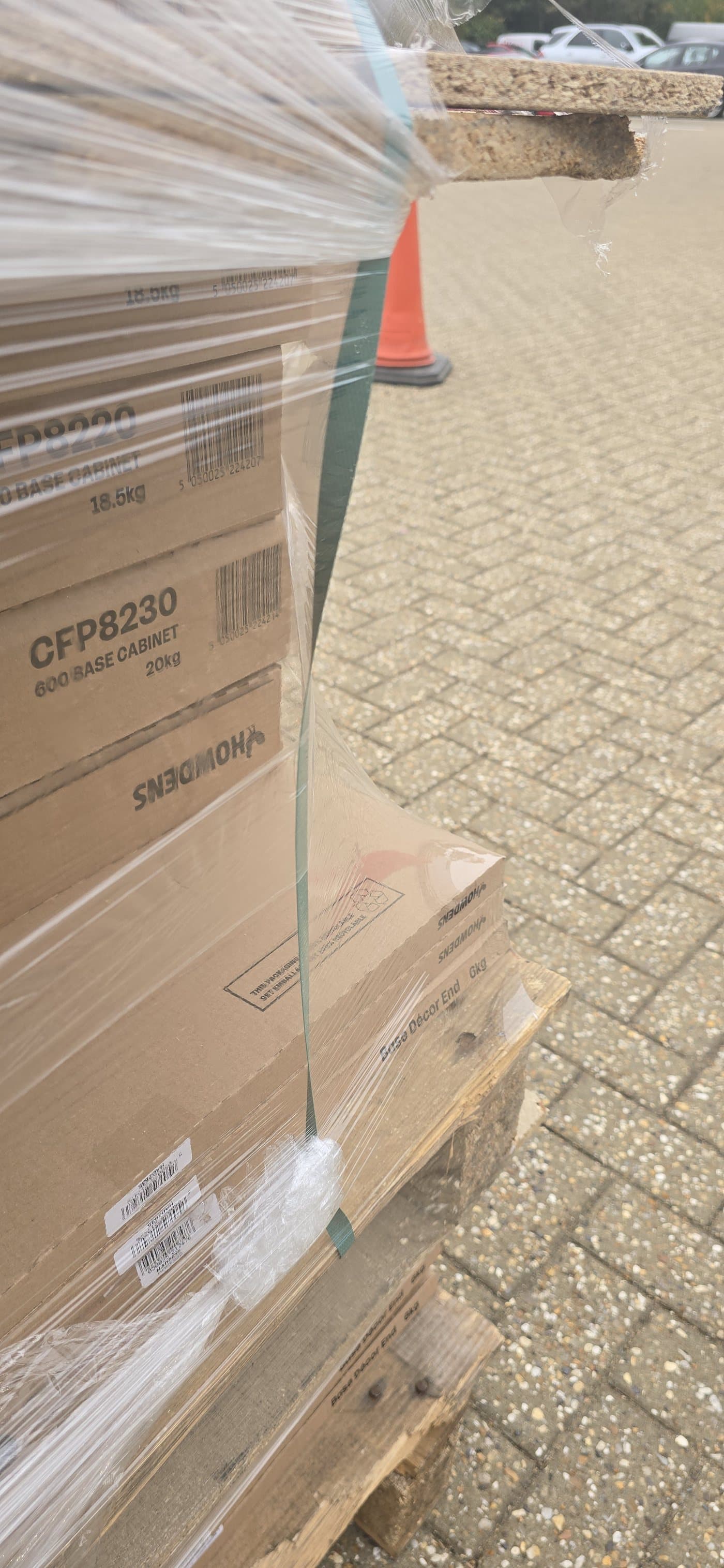
Hyper Wrap film pulled tight around the bottom corner of the load and down onto the pallet itself 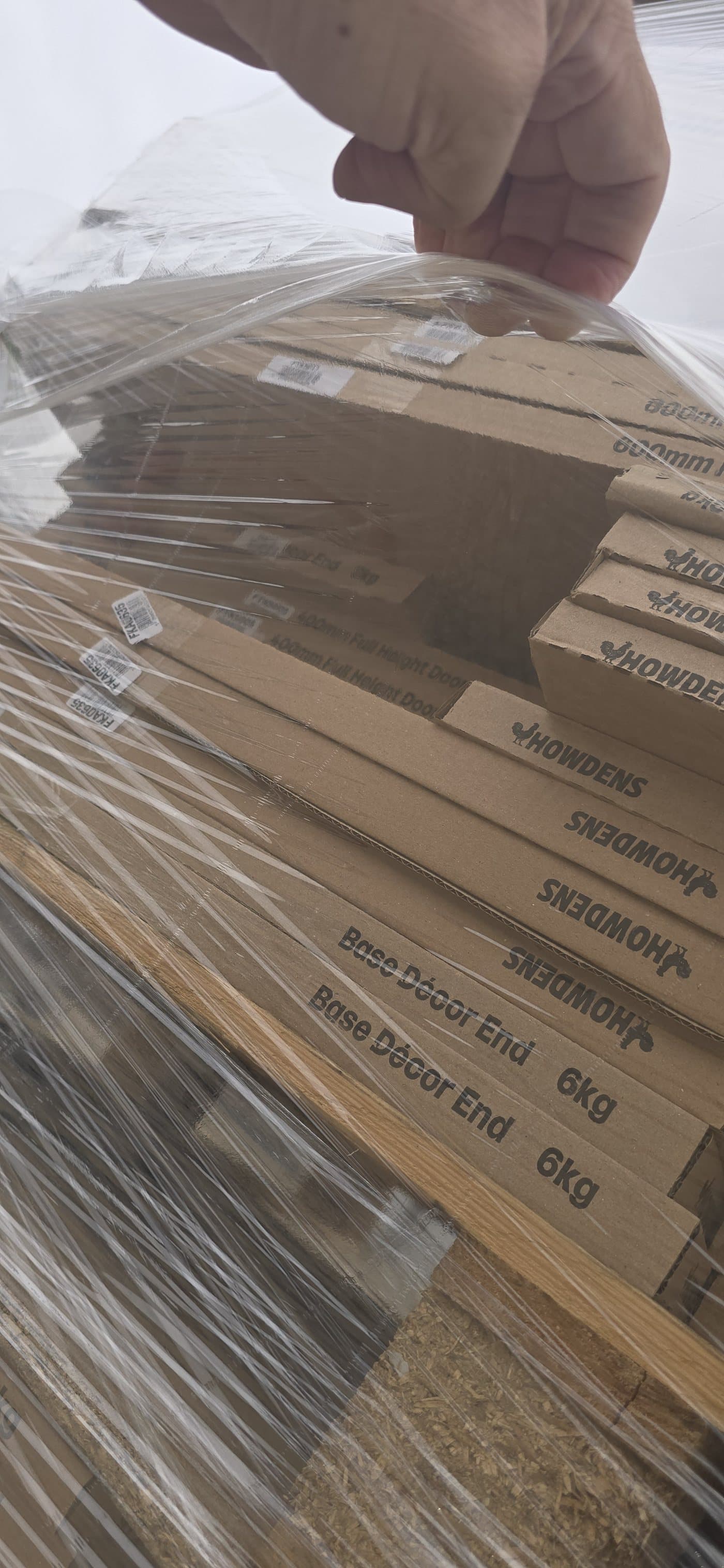
Hyper Wrap film lifted at the top of the load, showing how it is drawn over the top edge of the cartons and back down
Hot-filled bottles sweated under solid wrap; rusting crowns and ruined labels drove damage above 2%.
Switched to Aerosonic with reinforced edges. Loads now breathe, cool dry and double-stack — damage under 0.5%.
Heavy sacks were over-wrapped with thick commodity film to stop collapse.
Supersonic held the loads with far less material — a 58% film reduction.
Solid wrap restricted airflow; spoilage and fruit-fly customs rejections at destination.
Aerosonic kept produce fresh and pest-free through inspection.
Solid film slowed blast-freezing and used heavy plastic per pallet.
Aerosonic let cold air reach the product — 35% faster freeze, plastic halved.
High cost-per-pallet and frequent re-wrapping across a busy depot.
Engineered reinforced film cut consumption and damage — a £20,000 annual saving.
Pallets collapsing in transit at 20,000 pallets a month, with runaway film cost.
Supersonic cut film 40% and stopped collapse — saving roughly £96,000 a year.
See where your wrapping operation is leaking money.
Request an audit — we will measure your true cost-per-pallet and show you the number you are missing.